
DECOUVREZ DANS CET ARTICLE
Wargaming in Paris: Sharing Practices That Can Benefit Companies
The first international edition of Wargaming in Paris took place on June 23 and 24, 2026 at the École Militaire. Over two days, the event offered a particularly rich immersion into the tools, methods, and practices of wargaming, with experience-sharing sessions from several European countries.
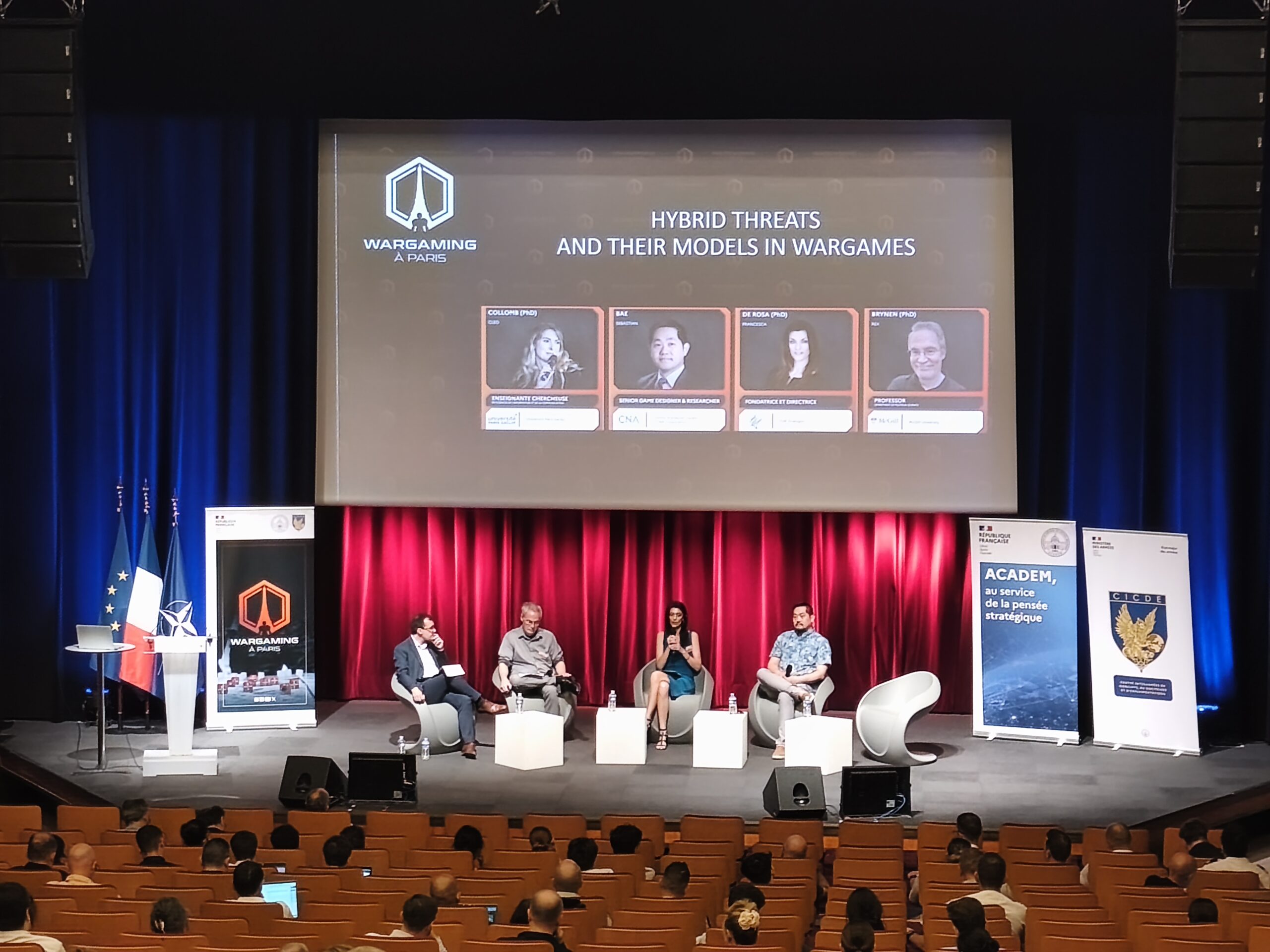
A tool for strategic analysis and decision support
The event clearly showed that wargaming has become a genuine tool for strategic analysis and decision support. It helps better understand modern military conflicts, test assumptions, anticipate adversarial reactions, and prepare different courses of action.
In a context marked by operational complexity, geopolitical uncertainty, and rapidly evolving technologies, wargaming provides a structured framework for exploring several possible futures before making a decision.
Wargaming is not only about simulating a confrontation. Above all, it helps represent a complex system, identify points of friction, test strategic options, and better understand the possible reactions of different stakeholders.
A still underused potential in the civilian world
The civilian world, however, was less represented, even though wargaming deserves to be better known and more widely used by companies. Its applications are numerous, especially in situations where decisions must be made under constraints, with high uncertainty and multiple stakeholders.
For companies, wargaming can be used in areas such as:
- Crisis management
- Complex competitive analysis
- International development
- Preparation for major contract negotiations
- Regulatory anticipation
- Response to technological disruption
- Assessment of possible reactions from competitors, customers, partners, or public authorities
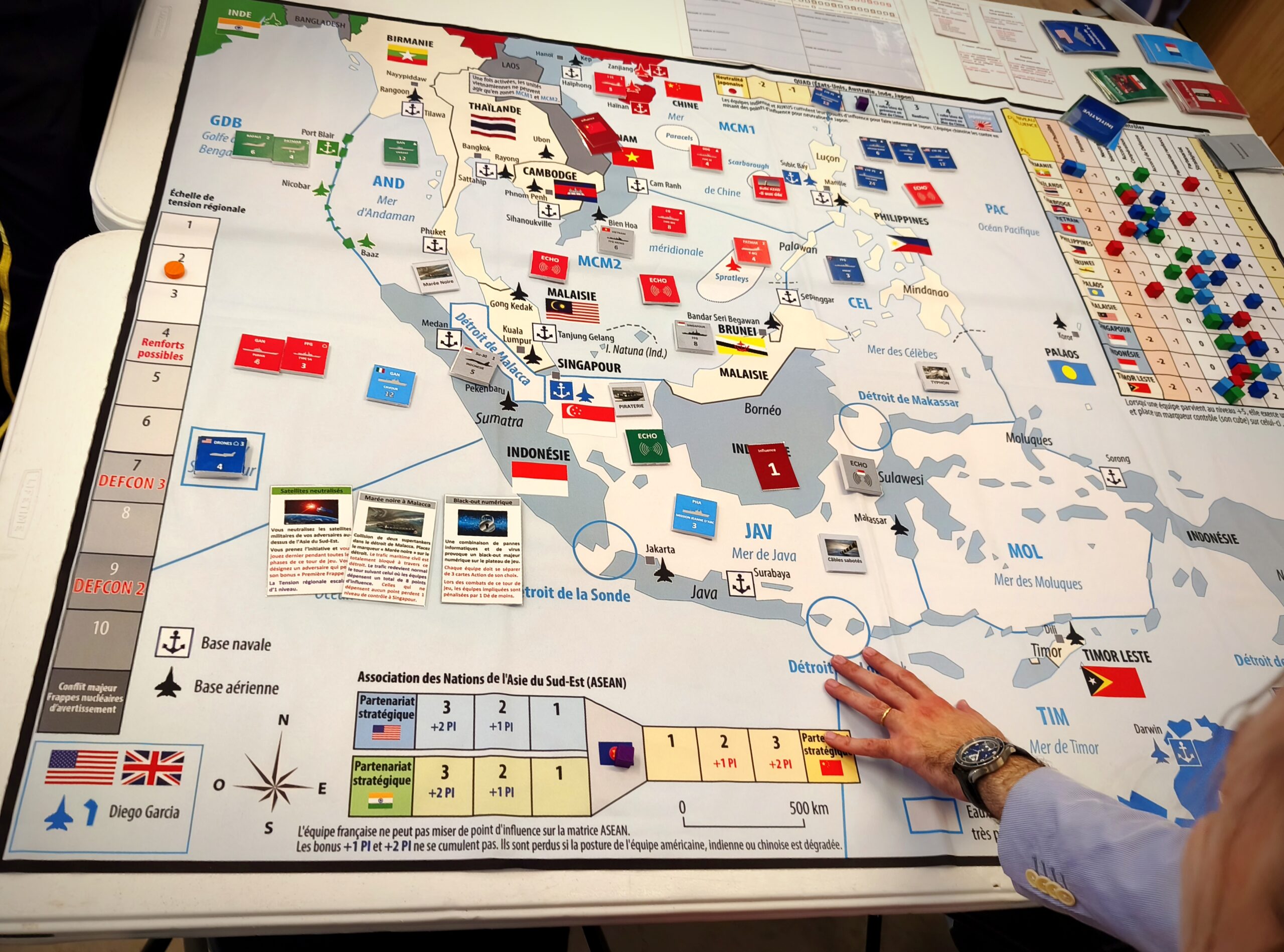
Corporate practices that remain discreet
Companies generally remain more discreet about their wargaming practices. This discretion is easy to understand: such exercises often deal with sensitive decisions, strategic markets, direct competitors, or confidential scenarios.
However, their experience would benefit from being shared more widely, at least from a methodological perspective. Civilian uses of wargaming differ significantly from practices derived from the military world.
The strategic territory of companies
The main difference lies in how “territory” is represented. In a military wargame, geography plays a central role: maps, positions, front lines, logistical routes, areas of control, and crossing points.
In a corporate wargame, geography may still matter, particularly in the context of international expansion or a logistics crisis. But the real strategic territory is often located elsewhere.
It is built around market segments, product portfolios, value chains, competitors, technologies, customers, partners, and regulatory constraints.
The battlefield for companies is not only physical. It is economic, competitive, technological, commercial, and institutional.
A useful method for making decisions before it is too late
This is precisely what makes wargaming particularly relevant for decision-makers. It helps represent a complex environment, simulate the reactions of key actors, and inform decisions before they become irreversible.
When used rigorously, wargaming helps move beyond a linear view of strategy. It forces participants to consider the intentions, constraints, resources, and possible reactions of other actors. It also helps identify the vulnerabilities of a plan, the blind spots of a strategy, and the unintended consequences of a decision.
Wargaming in Paris therefore highlighted the value of these methods for defense and military affairs. One of the key challenges in the coming years, however, will likely be to broaden their use in the civilian world, particularly among companies facing increasingly unstable competitive, technological, and regulatory environments.
